


De Hoop Nature Reserve Photographers Paradise — Marine Wildlife & Fynbos Dunes in Soft Light Ideal for Avid Photographers

De Hoop rewards early starts and quiet patience by photographers seeking the perfect shot. At dawn, the vlei settles into a pastel mirror — pelicans and flamingos lift off in the first light — and by late afternoon, long shadows rake across white dunes and limestone cliffs above the Indian Ocean. It’s one of the Cape’s rare places where marine life, wetlands and lowland fynbos line up in a single frame.
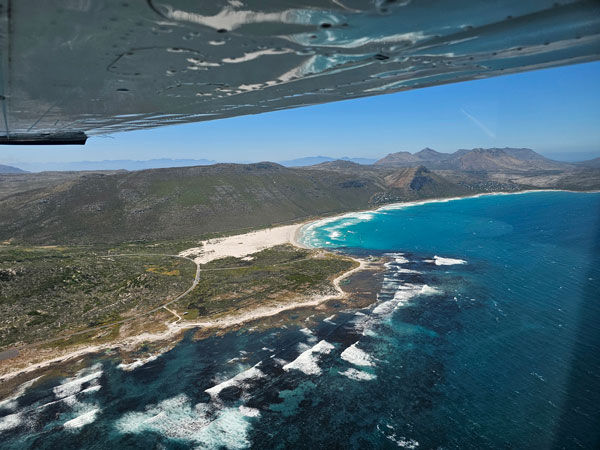
De Hoop Nature Reserve Photographers Paradise: Why it works for images
Marine megafauna, from shore. De Hoop’s no‑take Marine Protected Area is a renowned breeding ground for southern right whales; peak land‑based viewing runs roughly June–November (Koppie Alleen’s dune “grandstand” is the classic vantage). Expect mothers and calves close to the beach, and dolphins on the shoulder seasons.
Vlei mornings = clean, graphic frames. The 16–19 km Ramsar‑listed De Hoop Vlei hosts rich waterbird numbers; morning boat outings are ideal for low wind, reflections, and birds in soft light (look for pelicans, greater and lesser flamingos, and African fish eagles).
Shape and texture. Limestone shelves, rock pools and high dune faces at low tide give leading lines and tonal contrast for abstracts and long exposures; plan walks from Koppie Alleen around the tide tables.
Fynbos colour fields. De Hoop protects one of the Cape’s largest tracts of rare lowland fynbos—use longer lenses wide open to layer colour and isolate blooms against dune horizons.
Season & subjects
Whales: Best from June–November; good swell and backlight days enhance blow and breach arcs.
Birds: Year‑round, with surges of waterbirds on the vlei; the reserve lists ~260 species. Potberg’s colony offers flight shots of Cape vultures on thermals (respect distance and access rules).
Field notes for the Lens & Latitude Air Safari
First light on the vlei, last light on the coast. Structure your day around a morning vlei cruise (reflections, silhouettes, birds on still water) and a late‑afternoon coastal walk (dune contours, side‑lit cliffs, whales in season).
Keep it light and slow. Tripod or travel monopod for pre‑sunrise vlei work; ND and polariser for tide pools and longer coastal shutters; a 100–400 mm (or similar) covers whales and birds without encroachment. (Low‑tide access is key for rock‑pool compositions.)
Ethics over proximity. De Hoop’s MPA and vulture sites are protected—observe distances and stay on paths; great images here come from light, angle and patience, not approach.
De Hoop Nature Reserve Photographers Paradise!


Comments