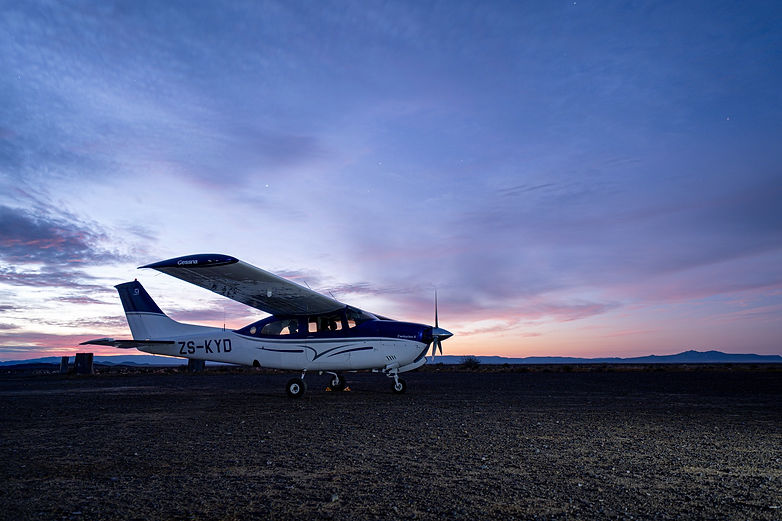
Seasonal Flying in Southern Africa
Seeing Southern Africa from the air gives you a very different understanding of the place.
On the ground, safari asks you to slow down. You feel the road under the tyres, catch the smell of dust in the air, listen for movement in the bush and wait for those small signs that something is close. That slower pace is part of the magic.
From the air, the picture opens up. Rivers, mountains, coastlines, desert edges, vineyards and wetlands stop feeling like separate places and start to connect. You can trace the water, spot old animal paths, and begin to understand why certain landscapes hold life the way they do. It gives you a wider view, not only of the land below, but of the journey itself.
For travel agents designing thoughtful itineraries, private travellers wanting something more personal, safari guests short on time, business travellers with tight schedules who need a private air charter, or aviation enthusiasts who simply love the idea of flying the wild; the season to fly is important. The best month to fly is not always the same as the best month to drive. Light, weather, wildlife movement, whale migration, lodge access and routing all play a part in the decision.
This seasonal guide looks at the best months to fly in Southern Africa, and how African air safaris, scenic flights and fly-in experiences can be curated around the different seasons of the region.
Quick Overview: When Is the Best Time to Fly in Southern Africa?
If you want the short answer, May to October is generally the strongest flying safari window across much of Southern Africa. These are the dry winter and early spring months, when wildlife gathers around permanent water, vegetation thins, skies are often clear, and game viewing becomes more predictable. Across Southern Africa, June to October is widely regarded as a prime safari period for classic wildlife viewing, especially in regions such as South Africa, Botswana, Zimbabwe and Zambia.
That said, there is no single “best” month for every traveller.
-
Best for classic safari conditions: June to September
-
Best for whale watching by air over Hermanus: July to November, with strong seasonal activity often from August to October
-
Best for Okavango Delta water experiences: June to August, when floodwaters from Angola usually peak in the Delta during Botswana’s dry season
-
Best for fewer crowds and softer light: April, May, October and November
-
Best for green-season landscapes, birds and newborn wildlife: November to March
-
Best for Cape flying experiences, wine routes and coastal scenery: Year-round, with route planning around local weather
For Africa Sky Runners, the real beauty lies in customising the route. Our private flying safaris and private air charters are built around flexible routing, pilot-guides, agile Cessna aircraft and access to remote destinations across Southern Africa.
1. May to October: The Classic Safari Flying Season
For many safari travellers, this is the season they imagine before they arrive: cool mornings, warm days, dry bush, golden light and animals moving with purpose toward water.
Across much of Southern Africa, the dry season runs roughly from May or June into October. As surface water becomes scarce, animals concentrate around rivers, pans, dams and lodge waterholes. The grass drops, trees lose leaves, and visibility improves. This is why June to October is so often recommended for Southern African safaris.
For African bush flying safaris, this season has a natural rhythm. Early morning departures often come with crisp air and smooth conditions. From the window of a light aircraft, the winter landscape reads clearly: dry riverbeds, open plains, animal tracks, floodplains, ridgelines and the occasional glint of water that tells you where life is gathering.
For travel agents, this is the season to consider when clients say:
-
“We want the best chance of seeing wildlife.”
-
“It is our first safari.”
-
“We are combining several lodges or countries.”
-
“We want a seamless, high-impact itinerary without too many road transfers.”
Africa Sky Runners’ private flying safaris are especially well suited to this thinking. Our flying safari offering includes customised itineraries, private aircraft, pilot-guides, handpicked lodges and flexible routing across reserves, coastlines and borders. Instead of long drives between wilderness areas, guests can move efficiently between destinations while still enjoying the romance of low-level scenic flying where appropriate and safe.
This is also the season where multi-country routes become especially rewarding. Africa Sky Runners’ sample flying safari itineraries include combinations such as Bush, Beach & Wildlife, linking the Kruger region, Mozambique and Gorongosa, and Africa’s Wild Waterways, which connects places such as the Zambezi, Victoria Falls, Chobe, the Okavango, the Kwando and Mozambique’s coastline. These are routes where the aircraft is not just transport. It becomes part of the experience.
A dry-season fly-in safari can also work beautifully for business travellers or time-sensitive guests. A private air charter to a lodge, reserve or remote destination cuts down on road time and creates a more relaxed journey. Africa Sky Runners offers private air charters for safari lodges, remote destinations and tailored travel requirements.
Best months in this season:
June, July, August and September for classic game viewing. May and October are excellent shoulder options, with May offering cooler, quieter travel and October bringing dramatic heat, dust and late-season wildlife concentration.
2. November to March: The Green Season from the Air
The green season is sometimes misunderstood. Yes, there is rain. Yes, the bush can be thicker. Yes, wildlife may spread out because water is more available. But from the air, this season can be breathtaking.
Summer rains turn the landscape alive. Dry pans fill. Rivers pulse. Grasslands flush green. Storm clouds build in the afternoon, often leaving behind that electric post-rain light photographers dream about. Migratory birds arrive, many antelope species give birth, and predator activity can be fascinating around newborn wildlife. In Southern Africa, the wet or green season generally runs from around November to March or April, depending on region.
For aviation lovers, this season offers drama. Flying over the bush after rain gives you a completely different sense of scale. Watercourses that were invisible in winter now shine. The Kalahari softens. The Lowveld thickens. The air smells different when you step out at the strip.
For travel agents:
Green season is a strong consideration for repeat safari guests, photographers, birders and travellers looking for more atmosphere and fewer vehicles at sightings. It can also bring better value in some safari regions outside peak holiday periods.
There are practical considerations. Summer flying requires thoughtful planning around heat, thunderstorms and timing. Morning flights are often preferred, before convective weather builds later in the day. Remote strips may need weather checks after heavy rain. This is where a knowledgeable flying safari operator becomes important, because the route should be built around both the guest experience and the operational realities of African skies.
With Africa Sky Runners, the value lies in flying with experienced commercial pilots and aircraft suited to Southern African conditions, including short strips, coastal winds and gravel runways. That kind of experience matters in every season, but particularly when weather and terrain require a practical, pilot-led approach.
Best months in this season:
November for the first green flush, December and January for lush landscapes and holiday itineraries, February and March for birding, dramatic skies and quieter safari moments.
3. Botswana, the Delta and Wild Waterways: Why Timing Matters
Some landscapes are made for flying. The Okavango Delta is one of them.
From the air, the Delta feels almost impossible: water spreading through the Kalahari, palm islands floating in a maze of channels, elephants moving between floodplains, mokoro trails etched through reeds. It is one of the great aerial perspectives in Africa, and its timing is wonderfully counterintuitive.
Unlike many safari areas where water arrives during the local rainy season, the Okavango’s floodwaters come from Angola and usually reach Botswana months later. The flood often peaks during the dry season, around June to August, which is why this period is so highly valued for water-based safaris and game viewing.
For fly in safaris that include Botswana, timing depends on what the guest wants most.
If they want water channels, mokoro excursions, cool mornings and classic Delta beauty, then June, July and August are strong months. If they want intense late dry-season game viewing, September and October can be superb, although October is often very hot. If they want birding, green-season photography and fewer people, November to March has its own appeal, especially for travellers who understand that wildlife may be more dispersed.
Africa Sky Runners’ Africa’s Wild Waterways sample flying safari speaks directly to this kind of traveller: a route built around the Zambezi and Victoria Falls, Botswana’s Chobe and Okavango or Moremi, Namibia’s Kwando region and Mozambique’s Tofo coastline. For an agent, this is a useful reminder that a flying safari is not simply about linking lodges. It is about linking ecosystems. The aircraft gives guests a sense of geography that is difficult to grasp on the ground. You can see why animals move the way they do. You can understand why rivers define borders, why floodplains matter, why the dry season gathers life into narrow ribbons of water.
Best months for Botswana-style waterways:
June to August for floodwaters and water-based safari experiences. September and October for peak dry-season game concentration. November to March for birds, green landscapes and a softer, more seasonal mood.
4. Cape Flying Experiences: Wine, Coast, Karoo and Big Sky Country
Not every African flying experience needs to be a traditional safari. Some of the most memorable flying in Southern Africa happens over the Western Cape, where mountains, vineyards, coastline and semi-desert sit within striking distance of one another.
This is where Africa Sky Runners’ Flying Experiences in the Western Cape come into their own. These experiences depart from Stellenbosch or Cape Town and are designed to skip long road transfers while opening up coastlines, desert landscapes, vineyards and starry-sky destinations by light aircraft.
The Western Cape has a different seasonal rhythm to much of the safari interior. Cape Town and the surrounding region experience winter rainfall, while summers are generally drier and warmer. For scenic flying, wine experiences and coastal routes, the best month often depends on the kind of experience guests want.
Africa Sky Runners’ flying experiences include routes such as West Coast Wine & Dine by Air, a three-day loop through the West Coast, Karoo and Robertson wine regions, and Wings and Wine Weekend: Breede Valley Sky Escape, a two-night Cape Winelands escape into the Breede River Valley. These are not “tick-box” flights. They are designed around the pleasure of the journey: the view over the wing, the short hop instead of a long road, the sense of arriving somewhere special before lunch.
For private travellers, these experiences work well as add-ons to a Cape Town stay. For travel agents, they can create a standout itinerary moment before or after safari. For aviation enthusiasts, the appeal is obvious: classic light aircraft flying through some of South Africa’s most photogenic terrain.
Seasonally, spring and autumn are especially attractive. Spring brings wildflowers in parts of the West Coast and a crisp freshness to the landscape. Autumn often brings settled light, vineyards turning colour and comfortable temperatures. Summer suits coastal and wine itineraries, though wind and heat are part of the Cape’s character. Winter can be atmospheric and beautiful, but flights remain weather dependent.
Best months for Cape flying experiences:
March to May for autumn light and winelands atmosphere. August to October for spring colour, whale season combinations and fresh landscapes. November to March for summer coast-and-wine itineraries, planned around wind and heat.
5. Hermanus Whale Watching by Air: The Seasonal Flight Worth Planning Around
Some flights stay with you because of the destination. Others stay with you because of what you see along the way. A Hermanus whale watching flight is both.
Each year, Southern Right whales migrate to the sheltered waters of Walker Bay to calve, nurse and mate. Hermanus is widely known as one of the best whale-watching destinations in South Africa, with the season generally running from June or July through November, and peak sightings often around August to October or September to October.
From the cliffs, whale watching is already special. From the air, it becomes something else entirely.
You are not looking out at one patch of water, hoping for movement. You are seeing the shape of Walker Bay, the colour changes in the shallows, the coastline curving away beneath you. Then a pale shape appears under the surface. A mother and calf. Another pod further along. A breach, if luck is on your side. A tail lifting and disappearing into blue.
Africa Sky Runners offers a Hermanus Whale Watching by Air Scenic Flight, routing from Stellenbosch or Cape Town toward Hermanus and Walker Bay, with views over the Overberg and the opportunity to observe whales in season from above. The scenic flight is listed as a one-hour seasonal experience, with whale viewing over Hermanus and Walker Bay in season from July to November.
For travel agents, this is a beautiful seasonal inclusion for Cape-based guests. It works for honeymooners, families, small private groups, photographers and travellers who may not have time for a full marine itinerary. It is also ideal for guests who want the thrill of whale watching without committing to a boat-based outing.
The aerial perspective adds context. You can appreciate the Overberg coastline, the scale of Walker Bay, the relationship between mountain and sea, and the way whales use the bay’s sheltered waters. Africa Sky Runners’ whale watching scenic flight includes private return flights in a Cessna 210 from Stellenbosch or Cape Town, scenic aerial views over the Overberg, and whale watching off Hermanus and Walker Bay.
Of course, it remains a wildlife experience. Sightings are seasonal and never guaranteed. Weather matters. Sea state matters. Whale movement matters. But when the timing comes together, it is one of the most memorable scenic flights in the Western Cape.
Best months for Hermanus whale watching by air:
August, September and October for peak seasonal activity. July and November can also be rewarding, with conditions and whale movement varying from year to year.
6. How to Choose the Right Month for Your Guests or Your Own Journey
The best month to fly in Southern Africa depends less on the calendar and more on the traveller.
For a first-time safari guest wanting reliable wildlife sightings, June to September is hard to beat. For a photographer who loves storm light and colour, February or March may be more interesting. For a family visiting Cape Town in spring, a Hermanus scenic whale flight could become the highlight. For a couple wanting vineyards, coast and Karoo without hours on the road, a Western Cape flying experience in autumn may be perfect.
Here is a practical way to think about it.
Choose June to September if:
You want classic dry-season safari conditions, strong wildlife viewing, cooler temperatures and established lodge routines.
Choose October if:
You are comfortable with heat and want dramatic late dry-season wildlife concentration around remaining water.
Choose November to March if:
You enjoy green landscapes, birds, newborn animals, summer atmosphere and the possibility of better value outside peak holiday periods.
Choose August to October if:
You want to combine a Cape itinerary with seasonal whale watching over Hermanus and Walker Bay.
Choose March to May if:
You want softer travel conditions, autumn light, winelands experiences and shoulder-season safari planning.
Choose April, May or November if:
You want a balance of value, weather, game viewing and fewer crowds.
For Africa Sky Runners, this is where tailored flying matters. Their fleet includes Cessna 210, 206 and 208 aircraft, operated by experienced professionals, and their model is built around private air safaris, scenic flights, charters and curated flying experiences. The aircraft allows the itinerary to breathe. A route can be shaped around the lodge, the weather, the season, the guest profile and the story you want the journey to tell.
That is the real advantage of African air safaris. They are not only faster. They are more connected. They turn transfers into memories, geography into understanding, and travel days into part of the adventure.
FAQ: Seasonal Flying in Southern Africa
1. What is the best month for an African air safari?
For most classic safari routes in Southern Africa, June to September offers excellent conditions: dry bush, clearer visibility and wildlife gathering around water. May and October are also strong shoulder months, depending on destination and guest preferences.
2. When is the best time for whale watching flights over Hermanus?
The Hermanus whale season generally runs from June or July to November, with peak activity often around August to October or September to October. Africa Sky Runners offers seasonal whale watching scenic flights over Hermanus and Walker Bay.
3. Are fly-in safaris suitable for first-time safari guests?
Yes. Fly in safaris can be ideal for first-time guests because they reduce long road transfers and make it easier to combine different landscapes, lodges and wildlife areas. Africa Sky Runners’ flying safaris are tailored and include private aircraft, pilot-guides and flexible routing.
4. Is the green season a bad time to fly?
Not at all. The green season brings lush landscapes, dramatic skies, migratory birds and newborn wildlife. It does require thoughtful planning around weather, especially afternoon storms, but it can be one of the most beautiful times to see Southern Africa from the air.
5. Can scenic flights be added to a Cape Town itinerary?
Yes. Africa Sky Runners offers scenic flights and Western Cape flying experiences from Stellenbosch or Cape Town, including Cape Peninsula, Overberg, Hermanus whale watching, wine, coast and Karoo-inspired itineraries.
Conclusion
Southern Africa does not have one perfect flying season. It has many.
There is the dry-season safari, all dust and gold and animals moving toward water. There is the green-season flight, with thunderheads building over an emerald bushveld. There is the Cape coastline in spring, whales moving through Walker Bay below the wing. There is the autumn winelands hop, the Karoo overnight, the private charter into a remote lodge, the waterworld of the Okavango seen from above.
The best month to fly depends on what you want the journey to feel like.
For travel agents, seasonal planning is the difference between a good itinerary and an unforgettable one. For private travellers, it is the key to choosing the version of Africa that speaks to you. And for anyone who loves flying, there is no better way to understand this part of the world than from the sky.
With Africa Sky Runners, the aircraft is more than a way to get there. It is the thread that ties the whole journey together: bush, beach, wine, wilderness, whales, water and wide-open African sky.
Image credit: Shari Lee Thomson